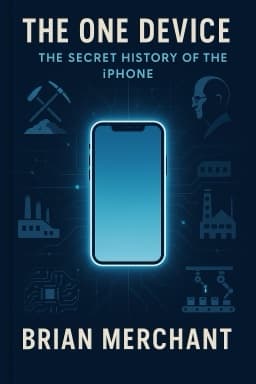
Brian Merchant
An in-depth history revealing the collective innovation, global supply chain, and cultural impact behind the iPhone.
The iPhone contains over 24 different chemical elements, many mined under hazardous conditions.
2 more facts available in the app
Section 1
7 Sections
Imagine a world where the seeds of the smartphone were planted long before the sleek devices we carry today existed.
Yet, despite its groundbreaking features, the Simon was a commercial failure, selling only 50,000 units. Why? The technology of the time was barely mature enough to support it. Batteries drained quickly, networks were slow and unreliable, and the device was expensive and bulky.
Long before the Simon, the idea of connected devices was already woven into the fabric of imagination. In the late 19th century, cartoons and novels depicted families communicating across continents via moving images and sound, an early echo of today’s FaceTime and video calls. These cultural artifacts reveal a persistent human desire: to bridge distances and stay connected.
At the heart of this technological evolution lies the telephone, invented by Alexander Graham Bell in 1876. Initially dismissed as a scientific curiosity, it took decades before the telephone became an indispensable part of daily life. This story reminds us that even the most transformative inventions must overcome skepticism and slow adoption.
From these early roots, the smartphone’s lineage is clear: a blend of visionary ideas, incremental technological advances, and cultural aspirations.
As we move forward, we’ll explore the hidden materials and human stories behind the iPhone’s creation, revealing the global journey from mine to market.
What was a key feature of the IBM Simon that foreshadowed modern smartphones?
13 more quizzes available in app
Smartphones were envisioned long before they became mainstream, with key ideas emerging decades earlier.
8 more insights available in app
Unlock all 7 sections, 9 insights, full audio, and interactive mind map in the SnapBooks app.
Unveiling the secret history and human stories behind the world's most iconic device.
Read articleExamining the iPhone as a symbol of global capitalism and its hidden human and environmental price.
Read article