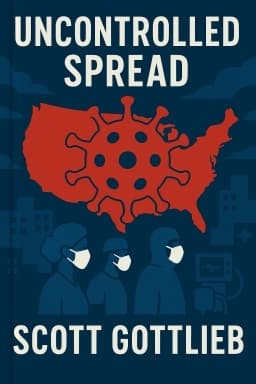
Scott Gottlieb
A detailed insider account of the US COVID-19 response, exposing failures and offering a roadmap for future pandemic preparedness.
The CDC’s initial COVID-19 test included an extra component (N3) not used by other countries, which caused contamination and false positives.
2 more facts available in the app
Section 1
8 Sections
In the early days of the COVID-19 pandemic, the United States found itself standing on a fragile precipice. Despite clear warnings from global health authorities and experiences from past outbreaks, the nation was unprepared for the tidal wave that was about to hit.
This vulnerability was not accidental. The US had long prepared for pandemic threats, maintaining a Strategic National Stockpile and developing pandemic playbooks focused primarily on influenza. Yet when SARS-CoV-2 arrived, the country’s preparations turned out to be a technocratic illusion. The stockpile lacked critical essentials, and many of the plans were ill-suited to a coronavirus.
Moreover, the virus did not arrive in a neat, traceable way. Instead, it likely entered through multiple travelers from various locations, evading the porous controls at US airports. The inability to detect asymptomatic carriers meant the virus spread silently in communities before anyone realized the magnitude of the threat. This blind spot left the nation vulnerable, with hospitals and healthcare workers bearing the brunt of the crisis.
The fear among medical staff was palpable. The risk of transmitting the virus to their families, the uncertainty about how to treat patients, and the rapid depletion of protective gear created an atmosphere of dread.
As we reflect on these early days, it is clear that systemic unpreparedness, coupled with delayed recognition and response, set the stage for a devastating outbreak. Yet, amidst the chaos, there were sparks of innovation and resilience that would carry the fight forward. This understanding lays the foundation for exploring how the outbreak unfolded in Wuhan, the challenges of information suppression, and the broader implications for global health security.
Let us now turn our attention to the origins of the virus and the veil of confusion and subterfuge that shrouded its early spread.
What was one of the key reasons the US was vulnerable at the pandemic’s start?
15 more quizzes available in app
Despite warnings, the US had fragile systems and stockpiles that were insufficient for the pandemic’s demands.
8 more insights available in app
Unlock all 8 sections, 9 insights, full audio, and interactive mind map in the SnapBooks app.
Neil Postman
Nick Bostrom
Temple Grandin

Steven Pinker
