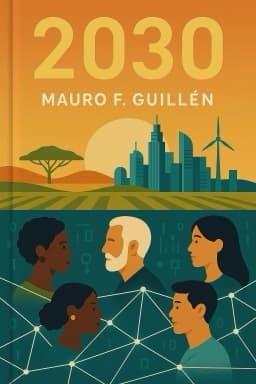
Mauro F. Guillén
An insightful guide to the demographic, economic, and technological trends reshaping the world by 2030.
By 2030, women are projected to own 55% of the world's wealth, a dramatic increase from 15% in 2000.
Section 1
7 Sections
Imagine a world where the familiar rhythms of population growth are suddenly disrupted. The steady increase in births that once defined global progress is now giving way to a baby drought in many parts of the world.
In many developed countries, birth rates have fallen below the replacement level of 2.1 children per woman. This decline is driven by women pursuing education and careers, delaying childbirth, and choosing to have fewer children. For example, American women have averaged fewer than two children since the 1970s, a trend mirrored across Europe, Japan, and China. This demographic transition means populations are aging, with fewer young people to support growing numbers of retirees.
Meanwhile, in sub-Saharan Africa, the story is different. The continent's population is booming, expected to grow from 1.3 billion today to 2 billion by 2038. This surge is fueled by higher fertility rates and improving healthcare, enabling more children to survive into adulthood. Africa’s vast, fertile lands—equivalent in size to Mexico—hold the promise of an agricultural-industrial revolution that could reshape its economy and the global food supply.
One might think migration could balance these trends, but even doubling migration flows would only delay demographic challenges by a few years. Political resistance and border controls limit migration’s potential. Thus, the demographic shift is inevitable, demanding new ways of thinking about economies, social support, and global cooperation.
Consider the example of a month-long blackout in Zanzibar, where the absence of electricity led to a 20% increase in births nine months later, illustrating how modern entertainment and lifestyle changes influence fertility.
As we move forward, understanding these demographic tides is crucial. They shape consumer markets, labor forces, and social structures.
Let’s now step into the world of aging populations and discover the power and potential of the gray market, where seniors redefine what it means to grow old.
What is the main demographic trend in developed countries?
13 more quizzes available in app
The shift from high birth and death rates to low birth and death rates, causing aging populations in developed countries.
8 more insights available in app
Unlock all 7 sections, 9 insights, full audio, and interactive mind map in the SnapBooks app.
Unveiling the seismic shifts in population, technology, and economic power that will redefine our world by 2030.
Read articleDive into the contrasting population trends shaping the future: the decline in developed countries and explosive growth in Africa.

Neil Postman

Nick Bostrom

Temple Grandin

Steven Pinker
