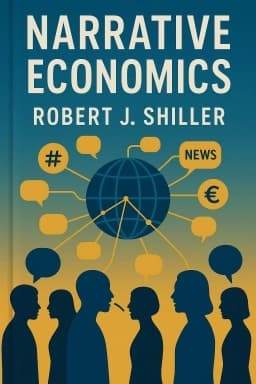
Robert J. Shiller
How viral stories drive economic events and why understanding them is crucial for forecasting and policy.
Robert J. Shiller coined the term 'irrational exuberance', which became a catchphrase during the dot-com bubble.
Section 1
8 Sections
Let us begin our journey with a gentle revelation: the world is not simply moved by numbers, charts, or rational calculations. It is moved by stories. Imagine a quiet evening, where people gather around a fire, sharing tales that spark hope, fear, or ambition. These stories, whether whispered over dinner tables or broadcast across nations, have the power to shape destinies.
For centuries, economists believed that data and logic alone directed the tides of markets and societies. Yet, time and again, we witness events that defy statistics—bubbles that rise on waves of optimism, crashes that follow sudden panics, and movements that catch fire seemingly out of nowhere. What links these phenomena is not a hidden equation, but a contagious story. Consider how the dream of easy riches fueled the speculative frenzy of the Roaring Twenties, or how the fear of job-stealing machines has haunted workers since the dawn of the industrial age. These are not just facts; they are narratives that dance from mind to mind, shaping the choices of millions.
As we step into the world of narrative economics, remember: behind every market movement, every policy shift, and every trend, there is a story waiting to be discovered. In the next section, we will explore how these stories spread, not unlike the gentle ripple of a pebble in a pond, or the viral sweep of a melody through a crowd.
What is the primary argument of narrative economics?
15 more quizzes available in app
The study of how viral stories shape economic behavior.
7 more insights available in app
Unlock all 8 sections, 8 insights, full audio, and interactive mind map in the SnapBooks app.
William Poundstone

Ian Ayres

Dan Ariely
Dan Ariely
