Lee G. Bolman and Terrence E. Deal
A multi-frame approach to understanding and leading organizations by integrating structural, human resource, political, and symbolic perspectives.
The four frames model was first introduced by Bolman and Deal in 1984 and has become a foundational concept in organizational studies.
Section 1
8 Sections
Imagine standing before a vast landscape shrouded in morning mist. The path ahead is unclear, and the terrain is full of hidden pitfalls and unseen opportunities. This is the world of organizations—complex, unpredictable, and often bewildering. Many leaders, even the brightest, find themselves lost in this fog, trapped by their limited ways of seeing. They cling to a single lens, a single story about their company or team, and that narrow view blinds them to critical realities.
Consider two giants of industry who set daunting goals for their companies but ignored warning signs because their worldview was too rigid. Their organizations resorted to unethical shortcuts, and the fallout was catastrophic—billions lost, reputations shattered, careers ended. These stories are not just about individuals but about the mental models that guide their choices.
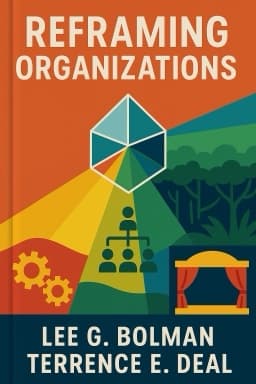
To navigate this complexity, we need more than one way of seeing. The four-frame model offers a powerful tool: it invites us to view organizations as factories, families, jungles, and theaters. Each frame reveals different truths. The factory frame emphasizes structure and efficiency; the family frame focuses on people and relationships; the jungle frame uncovers power struggles and politics; the theater frame illuminates culture, symbols, and meaning.
Like a kaleidoscope, each frame shifts the pattern, revealing new facets of the organizational mosaic. A leader who masters these frames gains the flexibility to reframe challenges, find new solutions, and inspire others. This approach is not about replacing one perspective with another but about weaving them together into a richer tapestry of understanding.
As we begin this journey, remember that reframing is both an art and a skill. It requires curiosity, humility, and practice. It is the antidote to cluelessness, the key to unlocking organizational wisdom. In the next section, we will explore why organizations are so complex and why simple thinking often fails us.
What is a primary reason smart leaders make poor decisions?
15 more quizzes available in app
Leaders often misread situations because they rely on a single mental model.
8 more insights available in app
Unlock all 8 sections, 9 insights, full audio, and interactive mind map in the SnapBooks app.
Discover the transformative power of seeing your organization through multiple lenses to become a more effective leader.
Read articleUncover the subtle reasons behind leadership failures and learn how a simple mental shift can save your organization.
Read article
Adam Kahane

Neel Doshi and Lindsay McGregor

Tim Sanders

Adrian Gostick & Chester Elton
